Collection documentation
How to document a watch collection clearly and privately.
Good documentation gives every watch a record that can be understood later without relying on memory. The aim is not to collect every possible detail, but to preserve accurate information, supporting material and context in a consistent form.
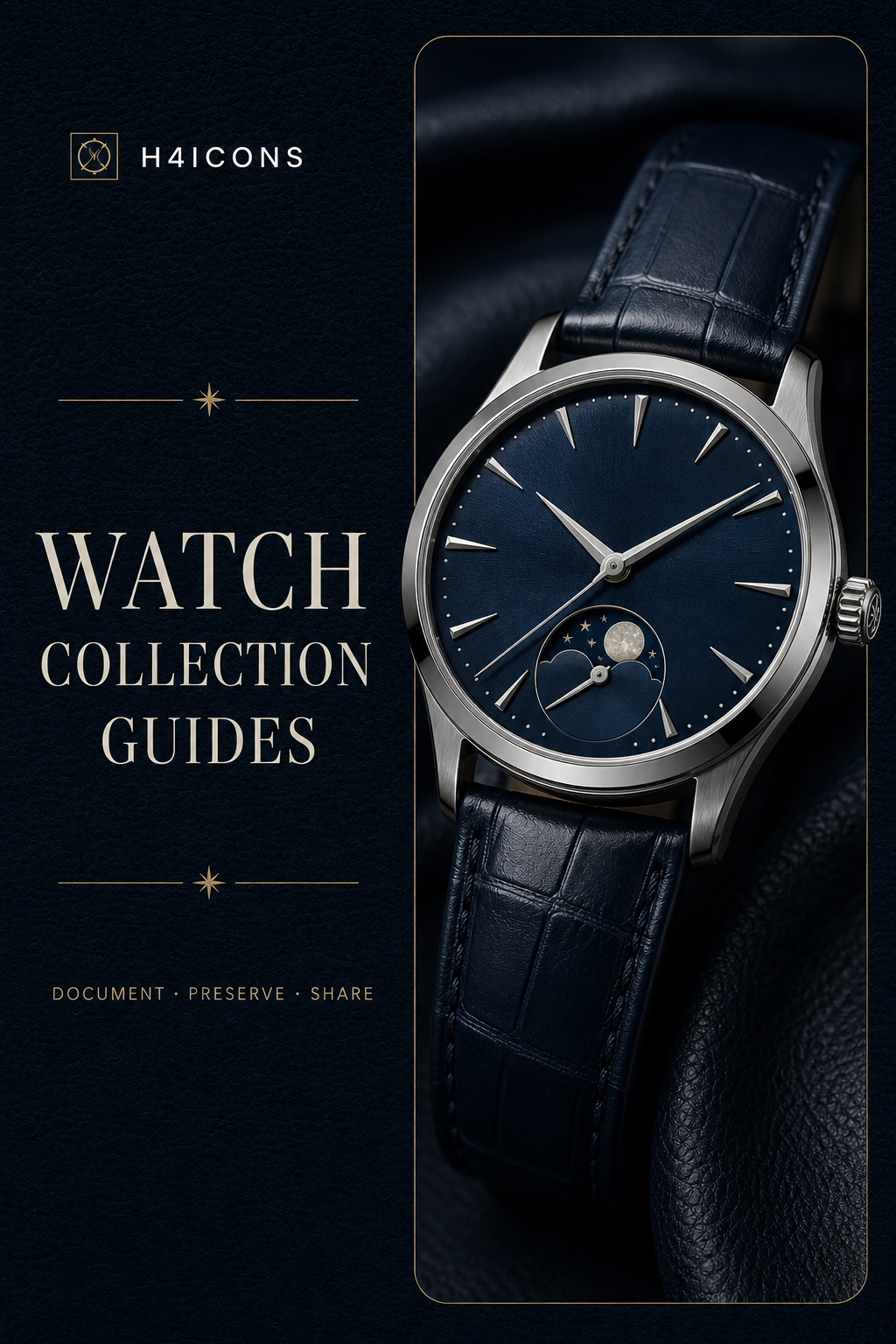
Identify each watch consistently
Record the brand, model, reference, approximate production period, movement and visible case details. Keep the serial number in the private record and avoid publishing it in full. When a detail is uncertain, mark it as unverified instead of presenting an assumption as fact.
Create a useful photographic record
Include a clear dial view, case profile, case back, clasp or buckle, movement only when it can be photographed safely, and relevant accessories. Preserve original files and add closer images of marks, wear or details that may matter later.
Keep documents with their context
Invoices, warranty cards, certificates, service reports and correspondence are more useful when their date, issuer and relationship to the watch are clear. Store a factual note when an original document is unavailable rather than creating certainty that the evidence does not support.
Separate private records from shared material
Purchase information, addresses, serial numbers, valuations and personal notes belong in the private record. A shared card or report should include only the photographs and facts appropriate for its audience.
Written and reviewed by Oscar Herrera for H4icons. H4icons is an iPhone app currently in development and is coming soon to the App Store.